
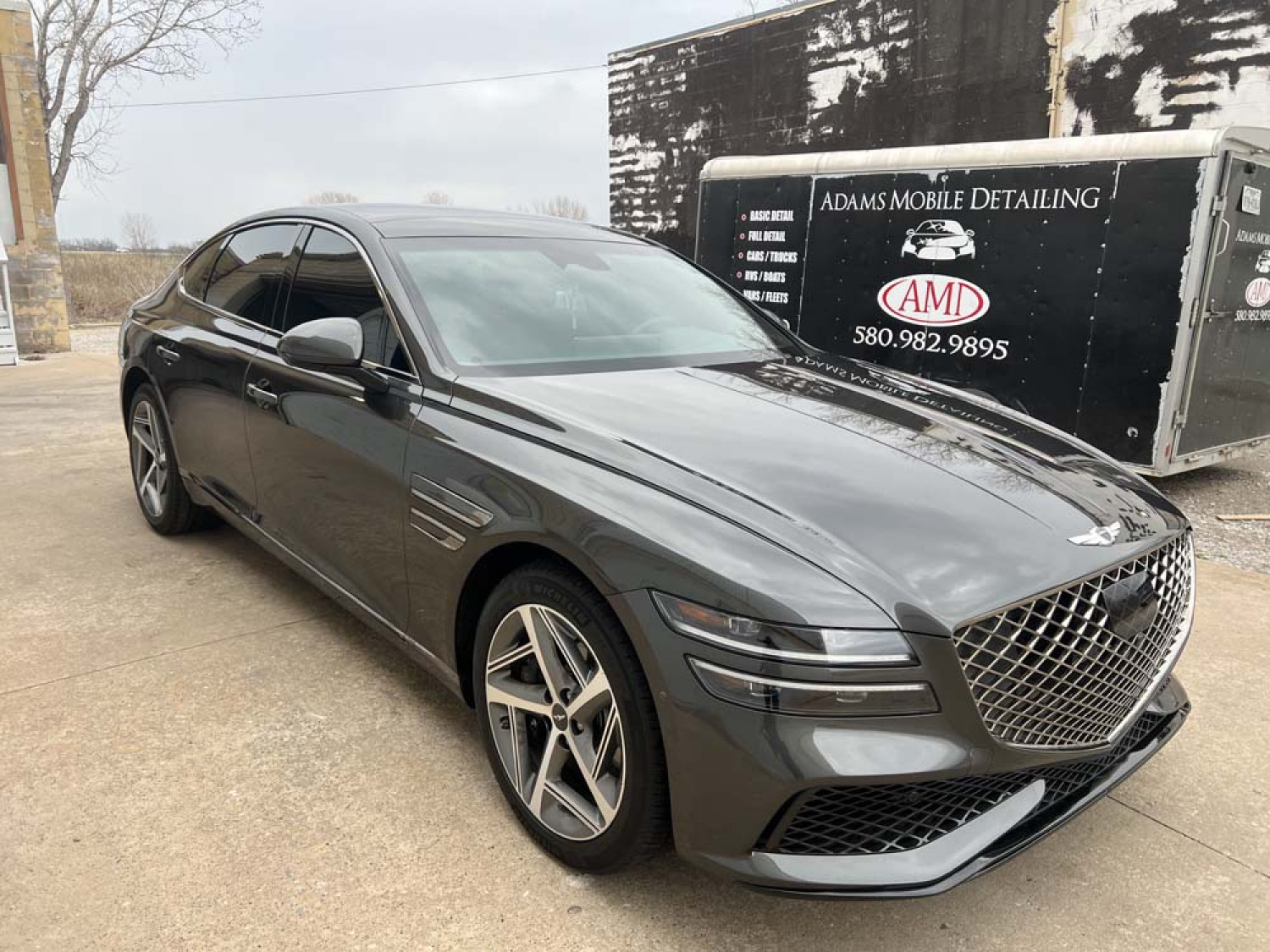
What Changes Once Correction Is Finished
After paint correction, your wheels reflect light evenly without the spiderweb pattern of swirl marks that scatter reflections in multiple directions. Oxidation-the white or gray film that forms on aluminum and painted wheels-disappears, revealing the original metallic sheen or color depth. Water spots that had etched into the clear coat are leveled out, so the surface feels smooth when you run your hand across it.
The process does not repair deep gouges that have penetrated through the clear coat into the base layer, but it significantly reduces the visibility of light-to-moderate scratches by blending the edges until they no longer catch light. Wheels that had appeared hazy or brown-tinted from oxidation regain their factory brightness, and the overall appearance of your vehicle improves because clean, glossy wheels draw less attention to any wear on the body panels.
Paint correction removes material from the clear coat, so it cannot be repeated indefinitely on the same wheels. Pairing the service with ceramic coating protects the corrected finish from accumulating new defects, extending the time before another correction becomes necessary. Without post-correction protection, wheels will develop new swirls and oxidation at the same rate they did before the service.
Questions Before Starting Your Project
Wheel finishes vary widely in hardness, thickness, and resistance to polishing. These questions address how correction adapts to different rim types and conditions.
- What types of defects can paint correction remove from wheels? The process eliminates swirl marks, light scratches, oxidation, water spots, and surface hazing; it does not repair deep scratches, curb rash, or chips that expose bare metal or primer.
- How long does the restored finish last without additional protection? Corrected wheels will begin accumulating new swirls and oxidation within weeks of regular driving unless they are sealed with wax or ceramic coating to slow contamination and UV damage.
- Can you correct wheels with matte or powder-coated finishes? Matte finishes cannot be polished without converting them to a gloss, and powder coating requires different techniques; correction is best suited for wheels with factory clear coat or painted finishes.
- How do you know if a wheel has enough clear coat left for correction? A paint depth gauge measures the thickness of the coating in microns; if the clear coat is below a safe threshold, aggressive correction risks burning through to the base layer and causing permanent discoloration.
- Why do wheels in Lawton oxidize faster than in regions with less temperature variation? Rapid heating and cooling cycles from brake use combined with high daytime temperatures accelerate the breakdown of clear coat resins, causing oxidation to appear within months rather than years on untreated wheels.